

Forklift Battery Chargers for Warehouse and Material Handling Equipment
Qiangfeng supplies battery chargers for electric forklifts and other material-handling equipment used in warehouses, logistics centers, manufacturing facilities and distribution operations. Charger configurations can be selected according to the forklift battery, operating schedule, power supply and installation conditions.


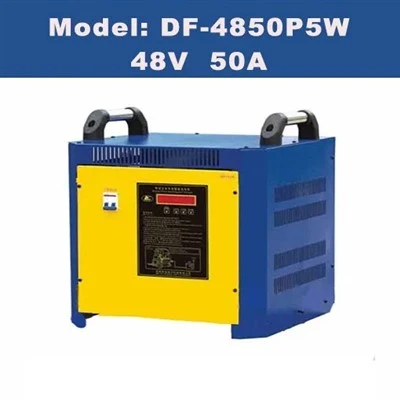
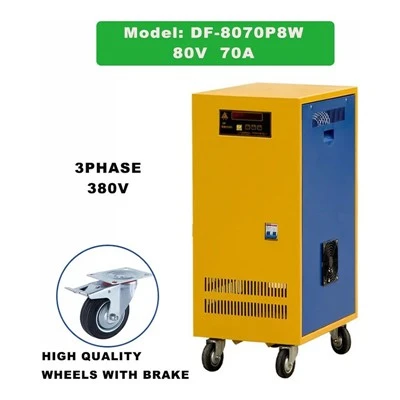
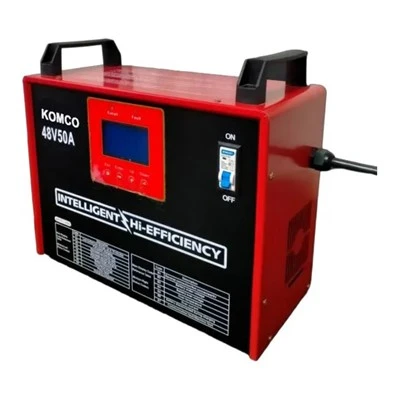
Forklift Charging for Different Operating Schedules
The charging method should fit how the forklift is used during the working day. A charger suitable for overnight charging may not be appropriate for a fleet that needs repeated charging between shifts or during scheduled breaks.
Single-Shift Operations
Suitable for forklifts that operate during a defined shift and have a longer charging window after work. Charger selection can be based on battery capacity, required charging time and available AC supply.


Multi-Shift Operations
For fleets operating across two or more shifts, charging time becomes a more important part of charger selection. Battery capacity, charger output and available charging windows should be considered together.
Opportunity Charging
This approach suits operations where forklifts can be connected during planned breaks, shift changes or other short idle periods. This charging method should only be used when the battery and charger are designed for the required charging pattern.


Fleet Charging
For facilities operating multiple forklifts, charger quantity, charging locations, electrical capacity and fleet charging schedules should be considered together.
Matching the Charger to the Forklift Battery
Forklift charger selection should start with the actual battery specification rather than the forklift model alone.

Battery Voltage:The charger's output voltage must match the requirements of the forklift battery. The battery nameplate or manufacturer specification should be checked before selecting the charger.
Battery Capacity:Battery capacity in Ah should be considered together with the required charging current and available charging time. A fleet with a long overnight charging window may require a different configuration from one with limited charging time between shifts.
Charging Current: The required charging current should be selected according to the battery capacity, charging time, charging method and battery manufacturer's requirements.
Battery Chemistry:Lead-acid and lithium batteries have different charging requirements. For lithium battery systems, the battery manufacturer's charging specifications and any required BMS or communication interface should be confirmed before the charger is selected.
Charging Profile: The charging profile should match the battery and its intended operating conditions.
Replacing an existing forklift charger is often more straightforward when the original charger and battery information are available for technical review.
For replacement projects, buyers can provide:
- Existing charger model or nameplate
- Battery manufacturer and model
- Battery voltage and Ah capacity
- Photos of the charger and connectors
- AC input specification
- Cable length and connection arrangement
- Forklift model
- Available installation space

Forklift chargers are commonly installed in designated charging areas, workshops or other fixed locations. The installation environment should be considered together with the charger specification.
Important points include:
- Available AC voltage and frequency
- Charger mounting position
- Space around the charger
- Ventilation and cooling conditions
- Cable routing
- Connector position
- Number of chargers required at the charging location
- Expected simultaneous charging demand
For OEM, replacement and fleet projects, charger configurations can be developed around the battery, forklift, installation and interface requirements of the application.
Electrical Configuration: Output voltage, charging current, AC input and application-specific charging requirements.
Connection & Mechanical Configuration: Charging connectors, cable length, housing dimensions, mounting arrangement and installation constraints.
Communication: CAN, RS485 or other interfaces where required by the battery, BMS or equipment system.
OEM Requirements: Product labeling, documentation, packaging and other project-specific requirements.
For technical review, buyers can provide the existing charger nameplate, battery specifications, connector photos and installation information before quotation.
Forklift charger requirements vary by battery type, electrical configuration and target market. Compliance documents and technical information can be confirmed according to the specific charger model and project requirements.
CE Compliance
Applicable CE documentation can be provided for charger models supplied to markets where CE requirements apply.
RoHS Compliance
RoHS-related documentation can be provided for products subject to applicable restricted-substance requirements.
ISO 9001 Quality Management
ISO 9001 certification applies to the manufacturing organization and supports the quality management requirements of the production process.
Technical Documentation
For project procurement, Qiangfeng can provide applicable product specifications, nameplate information, connection details, certificates and other supporting documents for customer evaluation.
Pre-Shipment Inspection
Where required, product configuration and key information can be reviewed before shipment, including electrical specifications, connections, labeling and other project-specific requirements.
Forklift Charger Procurement Checklist
Before requesting a quotation, buyers can prepare the following information:
|
Item |
Information to Provide |
|
Forklift |
Brand, model and application |
|
Battery |
Battery type, manufacturer, model and datasheet |
|
Battery Voltage |
Nominal battery voltage and required charging voltage |
|
Capacity |
Battery capacity in Ah |
|
Charging Schedule |
Single shift, multi-shift, overnight or opportunity charging |
|
Existing Charger |
Model, nameplate and photos for replacement projects |
|
AC Supply |
Available input voltage, frequency and phase |
|
Connector |
Connector type, photos and cable requirements |
|
Installation |
Mounting position and available space |
|
Quantity |
Sample, replacement quantity or fleet requirement |
|
Customization |
Mechanical, electrical, communication or branding requirements |
FAQ
As one of the most professional forklift charger manufacturers and suppliers in China, our products have good reputation in the market. We warmly welcome you to buy customized forklift charger made in China here from our factory. If you have any enquiry about quotation, please feel free to email us.
