

Lithium Battery Chargers for Lithium Battery Systems
Qiangfeng designs and manufactures lithium battery chargers for battery-powered vehicles, equipment and other lithium battery systems. Charger selection should be based on the battery specifications, charging requirements and BMS configuration rather than nominal voltage alone. Replacement and OEM projects can also be reviewed using the existing battery and charger information.


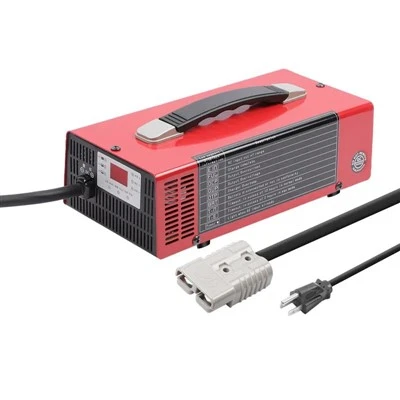

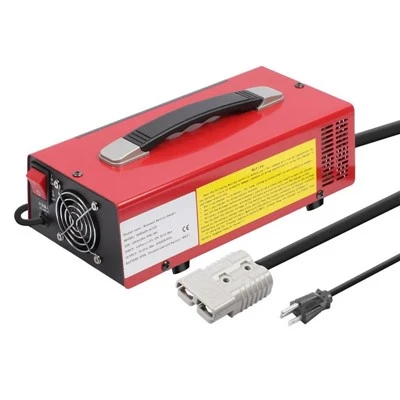
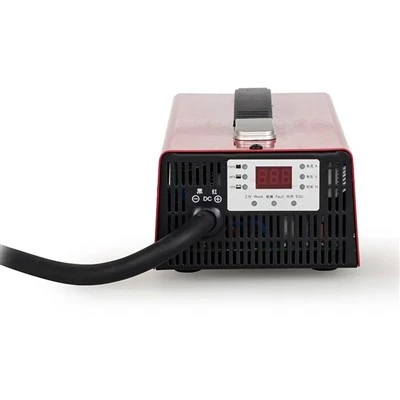
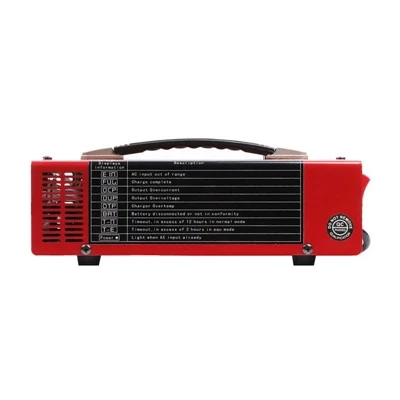

Lithium Battery Charger Reference Specifications
|
Parameter |
Reference Range / Configuration |
|
Output Voltage |
24V–96V, depending on model |
|
Charging Current |
Approx. 18A–50A, depending on model |
|
AC Input |
100–240Vac, 47–63Hz on referenced models |
|
Communication |
CAN / RS485 on applicable models |
|
Efficiency |
≥93% on referenced models |
|
Operating Temperature |
Approx. -30°C to +65°C on selected models |
|
Enclosure Protection |
Up to IP66, depending on model |
|
Cooling |
Forced-air cooling on selected models |
|
Protection Functions |
OVP, OCP, OLP, OTP and short-circuit protection, depending on model |
|
Customization |
Electrical, communication, connector and labeling requirements can be reviewed |

AGV & AMR:For automated mobile equipment requiring controlled lithium battery charging and, where applicable, BMS communication.
Electric Forklifts & Material Handling Equipment:For lithium battery systems used in forklifts and other electric material-handling equipment.
Aerial Work Platforms & Scissor Lifts:For battery-powered lifting equipment where charger output, installation conditions and charging requirements need to be matched.
Industrial Floor Cleaning Equipment:For scrubbers, sweepers and other battery-powered cleaning equipment requiring regular battery charging.
Utility Vehicles & Golf Carts:For lithium battery systems used in golf carts, utility vehicles and other low-speed electric equipment.
How to Select a Lithium Battery Charger
Battery Voltage
Confirm the battery's nominal and required charging voltage.
01
Battery Chemistry
Provide the battery chemistry and recommended charging requirements.
02
Battery Capacity
Provide the battery capacity to help determine the charger rating.
03
BMS Configuration
Confirm whether BMS communication is required.
04
Charging Schedule
Provide the required charging time or daily operating schedule.
05
BMS & Communication Compatibility
BMS compatibility depends on the communication interface, protocol and charging parameters. CAN or RS485 availability alone does not confirm compatibility.

Communication Interface
CAN and RS485 are available on applicable models.

Communication Protocol
The charger may need to match the battery system's communication protocol and charging parameters.

Information for Verification
For BMS-controlled charging, provide the BMS manufacturer, model, interface and protocol information for technical review.
Choosing the Charging Current
Charging current should be selected according to the battery’s charging limits and the required charging time. A higher-rated charger is not automatically suitable for every lithium battery system.
Battery Charging Limit
The selected current should remain within the charging current specified by the battery manufacturer.
Required Charging Time
A shorter charging time may require a higher charging current, provided that the battery system supports it.
Charger Current Rating
The charger’s rated current should match the required charging range rather than simply using the highest available output.
Charger Configuration
|
Configuration |
Description |
|
Onboard Charger |
Installed directly on the vehicle or equipment |
|
Offboard Charger |
Installed separately from the equipment |
|
BMS-Compatible Configuration |
Configured for supported BMS communication requirements |
|
OEM Configuration |
Developed according to agreed electrical, mechanical and identification requirements |
Replacing an Existing Lithium Battery Charger
A replacement charger should be checked against the battery charging parameters, BMS requirements, communication interface and connector configuration.
Qiangfeng can review the existing charger and battery information for replacement projects. Where available, provide the charger nameplate, battery datasheet, connector photos and BMS information.
AC input, DC output connector, cable length and equipment-side connection requirements can also be reviewed.

Installation Environment
The installation environment affects the required enclosure protection, cooling method, mounting arrangement and connection requirements.
Indoor Charging
Confirm the available AC supply, ambient temperature, ventilation and installation space.
Outdoor Charging
Check the required IP rating, operating temperature range, weather exposure and mounting conditions.
Onboard Charging
For chargers installed on mobile equipment, consider mounting space, vibration, cable routing, connector access and cooling conditions.


Offboard Charging
For stationary charging, confirm the installation location, AC supply, ventilation and connection arrangement.
Information Reviewed Before Quotation
Before proposing a charger configuration, Qiangfeng can review the following project information:
Electrical
Required charging voltage and current, AC input and charging conditions.
Battery & BMS
Battery model, chemistry, BMS model, communication interface and protocol.
Mechanical
Enclosure dimensions, mounting method, connector type and cable arrangement.
Operating Conditions
Indoor or outdoor installation, ambient temperature, cooling and IP requirements.
Project Requirements
Quantity, OEM/ODM requirements, labeling, documentation and destination market.
Qiangfeng carries out production inspection for lithium battery chargers, including applicable electrical, communication and protection-function checks before shipment.
- Output voltage and current testing
- CAN/RS485 communication testing on applicable models
- Protection-function testing
- Load or burn-in testing on applicable models
- Final inspection and nameplate verification

Technical Documents for Procurement

Depending on the model and destination market, Qiangfeng can provide applicable procurement and technical documentation, such as:
- Product datasheet
- User manual
- Electrical test information
- CE-related documentation
- UL certification/documentation for applicable models
- Product nameplate information
- Communication protocol information for applicable models
FAQ
As one of the most professional lithium battery charger manufacturers and suppliers in China, our products have good reputation in the market. We warmly welcome you to buy customized lithium battery charger made in China here from our factory. If you have any enquiry about quotation, please feel free to email us.
