

Battery Chargers for Vehicles, Material Handling and Industrial Applications
Qiangfeng supplies battery chargers for vehicle, material-handling and industrial battery systems. Configurations can be selected according to battery specifications, charging requirements and equipment conditions.


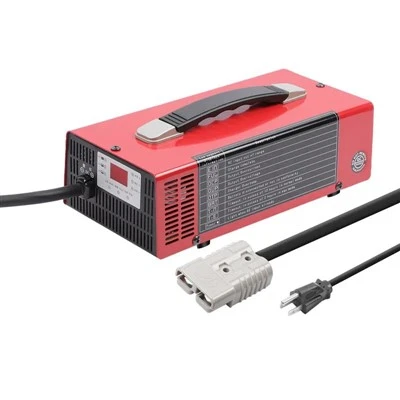

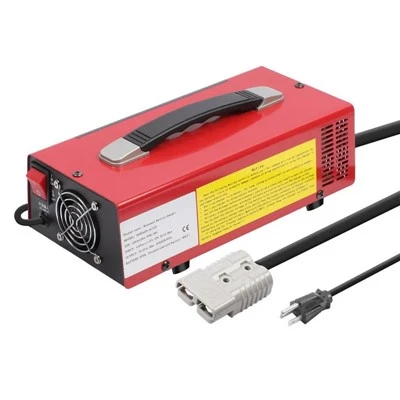
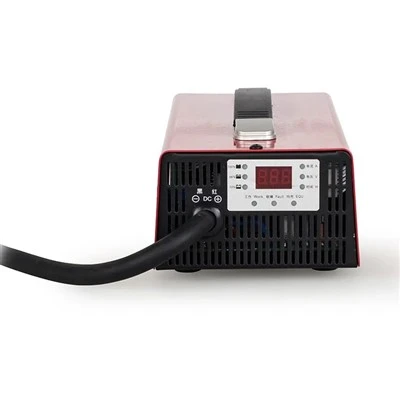
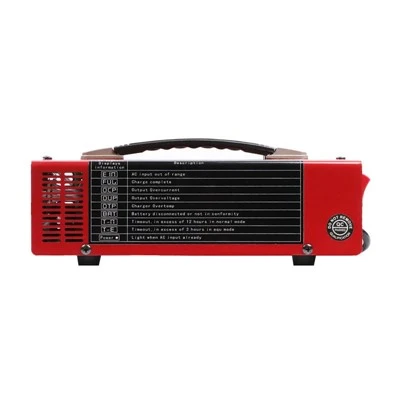


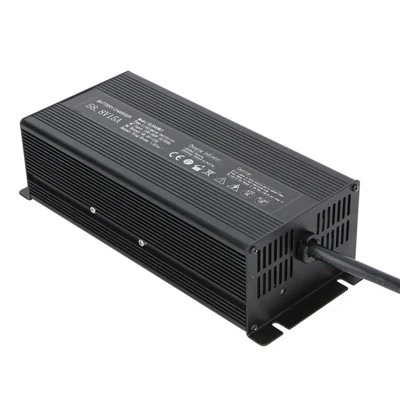
Battery Charger Range
Qiangfeng supplies battery chargers in different configurations for lead-acid, lithium and other battery systems. The appropriate charger is selected according to the battery specification, charging requirements and equipment configuration.
|
Battery Charger Type |
Typical Configuration / Selection Focus |
|
Forklift Battery Chargers |
Charger output, charging current, battery voltage, duty cycle and installation requirements |
|
Vehicle Battery Chargers |
Output voltage, charging current, input power, mounting method and connector configuration |
|
Lithium Battery Chargers |
Battery chemistry, charging voltage, charging current, BMS and communication requirements where applicable |
|
Application-Specific Chargers |
Electrical specifications, mechanical configuration, communication, connectors and other project-specific requirements |
Battery Charger Applications
Battery chargers can be configured for different operating environments, charging patterns and equipment arrangements.
Scheduled Charging
For equipment with defined charging windows and predictable operating schedules, such as equipment charged during planned breaks or between operating shifts.


Frequent Charging
For equipment that requires repeated charging during daily operation, where the charger may be used multiple times within the same working day.
Equipment-Integrated Charging
For chargers installed on or inside equipment where the charging unit remains with the vehicle or machine during operation.


Workshop Charging
For external charging in workshops, service areas or designated charging stations where equipment is brought to a fixed location for charging.
Replacement Applications
For replacing an existing charger on vehicles or industrial equipment while retaining the original battery and equipment system.


Application-Specific Equipment
For equipment with non-standard charging arrangements, installation conditions or electrical interfaces that require a project-specific charger configuration.
Technical Selection Guide for Buyers
Choosing a battery charger involves more than matching the nominal battery voltage. The charger should also fit the battery system, charging schedule and equipment installation conditions.

Confirm Battery Compatibility
Start with the battery type and required charging voltage. For lithium battery systems, confirm the battery chemistry and any BMS or communication requirements before selecting the charger.
Define the Required Charging Rate
Charging current should be considered together with battery capacity and the available charging time. Equipment operating several shifts may require a different charging configuration from equipment with longer charging intervals.
Check the Available Power Supply
Confirm the AC voltage and frequency available at the installation site. The required input specification should be established before finalizing the charger configuration.
Check Installation Conditions
For on-board, enclosed or equipment-integrated chargers, check mounting space, ventilation, cooling conditions, cable routing and connector position before production.
Confirm the Equipment Interface
If the charger needs to connect to existing equipment, verify the connector, cable arrangement, communication interface and other electrical or mechanical interfaces required by the system.
OEM & Custom Engineering Capabilities
Qiangfeng develops and manufactures battery chargers and related power electronics with in-house hardware and software R&D capabilities. Engineering and production requirements can be reviewed together to support application-specific charger development.
Charger configurations can be developed around the electrical, mechanical, communication and branding requirements of the target equipment.
Customizable Elements Include
- Input/output electrical specifications and charging parameters
- Charging profiles for different battery chemistries
- Communication interfaces such as CAN or RS485, where required
- Housing dimensions, mounting configuration and cooling requirements
- AC/DC cable length, wiring and connector configuration
- Product labeling, user manuals and brand packaging
For new projects, Qiangfeng can review the required electrical, mechanical and communication specifications before quotation.

What to Provide for Battery Charger Selection
For a technical review and quotation, buyers can provide the following information where available. Existing charger specifications, equipment drawings or photos can also be useful for replacement and OEM projects.
|
Information |
What to Provide |
|
Battery |
Battery type, manufacturer specification or battery datasheet |
|
Electrical Requirements |
Nominal voltage, required charging voltage and charging current, if specified |
|
Equipment |
Equipment model, application and basic operating conditions |
|
Power Supply |
Available AC voltage and frequency |
|
Installation |
Available mounting space, installation position and cooling conditions |
|
Connection |
Existing connector, cable length, wiring or communication interface |
|
Quantity |
Sample, trial order or estimated production quantity |
|
Customization |
Housing, mounting, labeling, communication or other OEM requirements |
Providing more complete information at the quotation stage helps reduce compatibility issues and allows the charger configuration to be reviewed before production.
FAQ
As one of the most professional battery charger manufacturers and suppliers in China, our products have good reputation in the market. We warmly welcome you to buy customized battery charger made in China here from our factory. If you have any enquiry about quotation, please feel free to email us.
